
Sex change in the aquarium: Three cuckoo wrasse fish are undergoing a spectacular transformation
There were wide eyes and professional excitement among the Øresund Aquarium's animal keepers and marine biologists when they recently looked into one of the aquarium's tanks. Five cuckoo wrasse fish were swimming there – but three of them had suddenly begun to show clear signs of a rare and fascinating natural phenomenon: sex change.
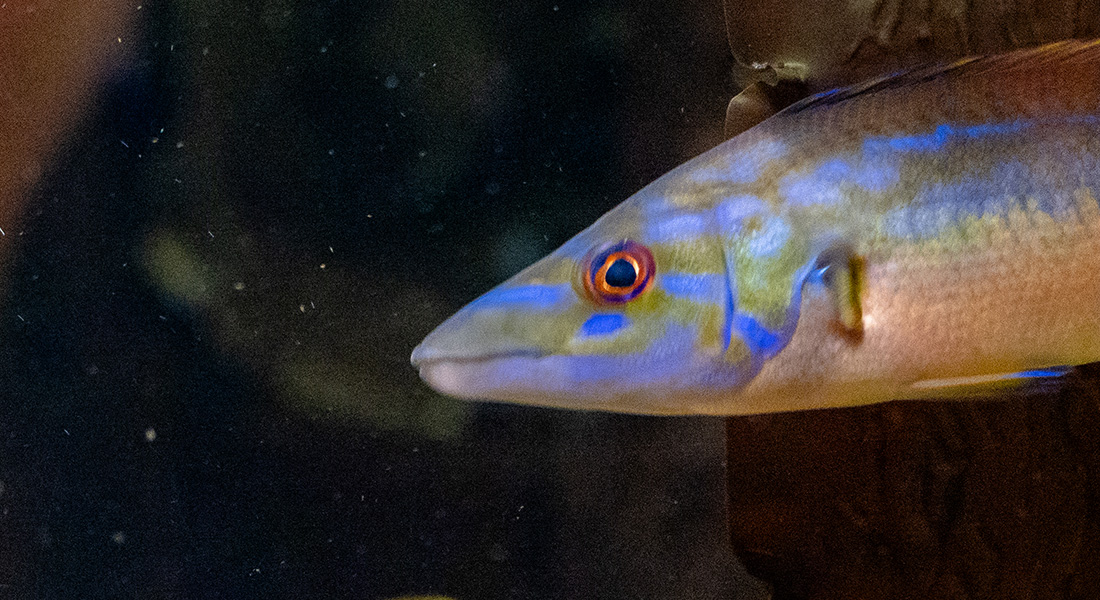
Distinctive blue stripes had appeared on the fishes' heads and bodies, revealing that the females were in the process of transforming into males. This is a process that normally takes place hidden in the depths of the sea – and is rarely documented in such detail in captivity.
‘We have been following the fish closely over the past month and can see both colour changes and altered behaviour day by day. This is the first time we have documented a sex change so clearly at the Øresund Aquarium,’ says Jens P. Jeppesen, aquarium manager and marine biologist at the Øresund Aquarium.
When nature confuses: Two names for the same fish in Danish
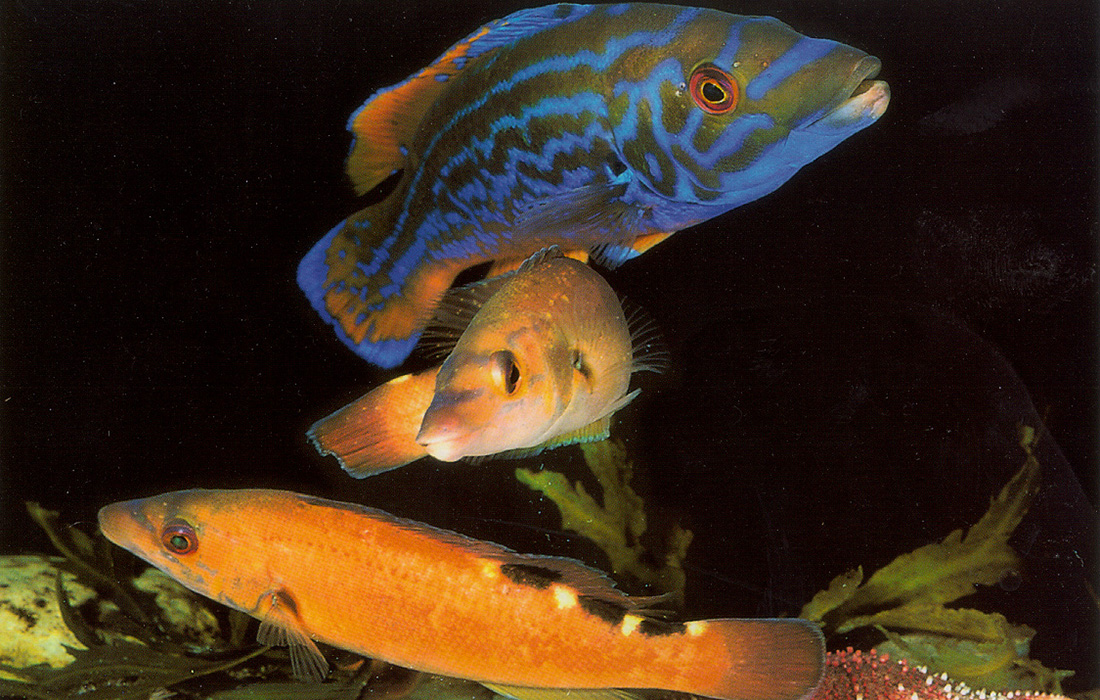
'Redfish' and 'bluefis'h are actually the same species, although for many years it was believed that they were two very different fish. It remains one of the only known species where the male and female have been given separate Danish names.
The Latin name Labrus mixtus literally means ‘mixed’ and hints at the historical confusion: one species, two colours, two expressions, two life stages.
From red-billed to blue-capped – in just seven months
All cuckoo wrasses start life as females. At some point between the ages of 4 and 13, some of them undergo a dramatic biological transformation: they become males – blue-capped.
The transformation takes 7–8 months and includes:
- changes to the sex organs
- new colours and patterns
- changed behaviour
- new territorial habits
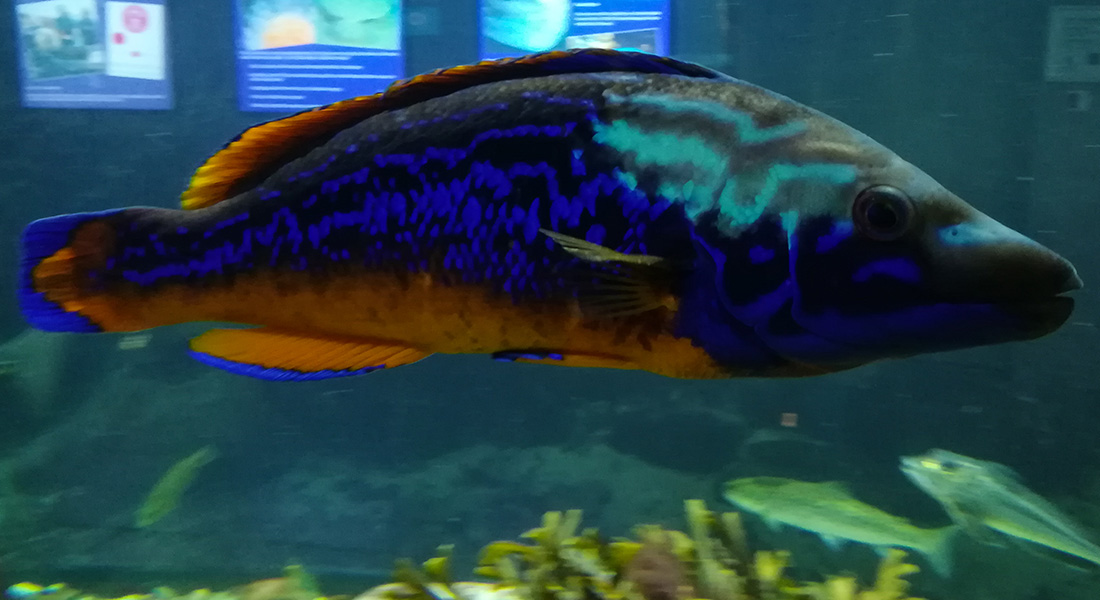
During the transition phase, the fish can be a spectacular mix of red and blue, which can now be experienced live in the aquarium.
Nature's strategy: Maximum offspring throughout life
The has developed a special reproduction strategy that gives it the best possible chance of producing many offspring:
- The male (blue-backed) establishes a territory and forms a harem of up to 40 females.
- The female (red-billed) starts life small and inconspicuous, and is therefore less vulnerable to predators.
- Later in life, when she is large enough to defend a territory, she changes sex and takes on the role of the male.
With its bright colours, the blue-backed fish is more visible to predators such as cod – therefore, it is advantageous that new males can be quickly “produced” when one disappears.
Biology and lifestyle
The cuckoo wrasse belongs to the large and colourful wrasse family. It:
- lives on hard bottoms and rocky coasts,
- moves between the surface in summer and depths of 200 metres in winter,
- is diurnal and sleeps in crevices at night,
- builds nests of algae and, in some cases, small ‘sand holes’ for its eggs,
- lays approx. 1,000 eggs, which hatch after 10 days.
The species feeds on mussels, snails and crustaceans – including barnacles, which it picks off rocks.
Colour play and mating dance – a spectacular sight
In the Øresund Aquarium's rock reef aquarium, visitors may also be lucky enough to witness the impressive mating ritual of the blue-spotted cornetfish. Here, green and blue colours pulsate overhead in shifting flashes – a seductive light show that changes from light to dark shades in a matter of seconds.
In nature, similar scenes can be seen during the summer months on reefs in the northern Øresund and in the Kattegat, where the blue-ringed angelfish courts its many females. Spawning takes place in May–July, also in the aquarium, but often a little earlier due to stable temperatures.
Experience the sex change during the winter holidays
During the rest of the winter holidays in week 8 and the coming month, visitors will have a very special opportunity:
Come and see three 'redfish' in the process of changing sex to 'bluefish' – live in the aquarium.
Ask the guides and animal keepers on arrival to hear about the day's observations.
The Øresund Aquarium is open every day from 10 a.m. to 5 p.m., and on Thursday 19 February, there will be extended evening opening hours from 5 p.m. to 9 p.m.